Are you currently planning a multicultural wedding? Weddings are already so special, and adding your special traditions and backgrounds from your culture can make your day even more meaningful.
Keep reading to learn more about how to incorporate traditions into your multicultural wedding and take a behind-the-lens look at a magical multicultural wedding in Hawaii!
How To Incorporate Traditions Into Your Multicultural Wedding
I love seeing how couples blend their different heritages and backgrounds into their weddings.
If you and your partner have already been discussing how you want to bring different traditions from your respective cultures into your wedding, here’s how you can respectfully blend your traditions:
Have an open and honest conversation with your partner
Discuss with your partner which traditions from your culture are most important to you and that you want to have, as this will help you integrate these traditions into your day.
This could look like having two ceremonies or dedicating different parts of your day to different traditions, such as having something in the morning and something in the afternoon. The most important thing is that you both feel like you’re including what’s most important to both of you and not sacrificing anything.
Share with your guests about the traditions you’re including
This is not something you absolutely have to do, but I think it’s respectful and important to share with your guests why you’re including specific traditions and what the meanings behind them are for you and your partner.
You’ll want your guests to understand each culture’s customs and traditions so there aren’t any misunderstandings or confusion. This also includes sharing the dress code with your guests, if applicable.
Find vendors who are respectful of your backgrounds and culturally sensitive
I always recommend choosing vendors for multicultural weddings who align with and respect your traditions. Ideally, hire vendors who already have experience working with different cultures.
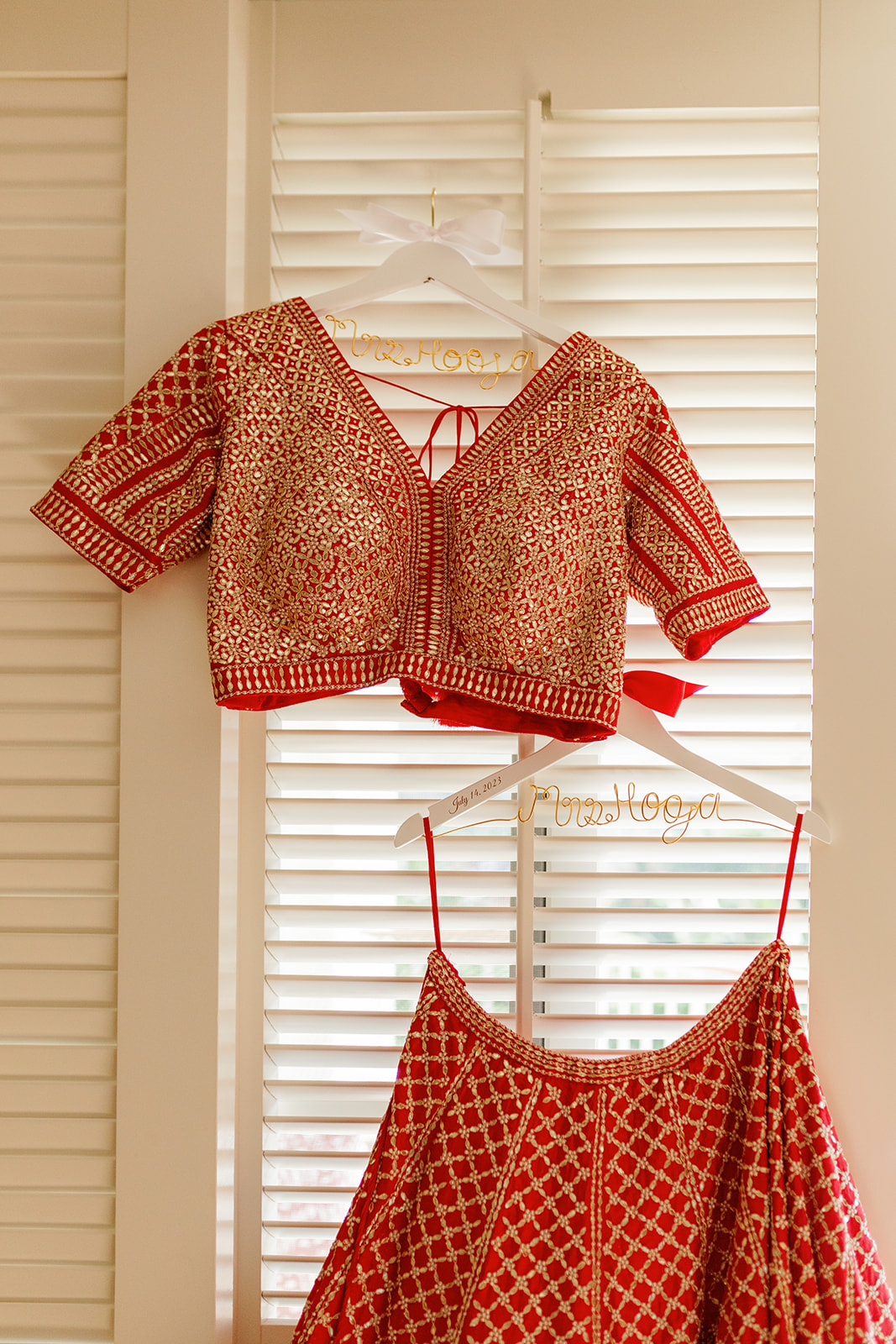
Eden and Gunjan’s Magical, Multicultural Wedding at Lanikuhonua Cultural Institute in Kapolei, HI
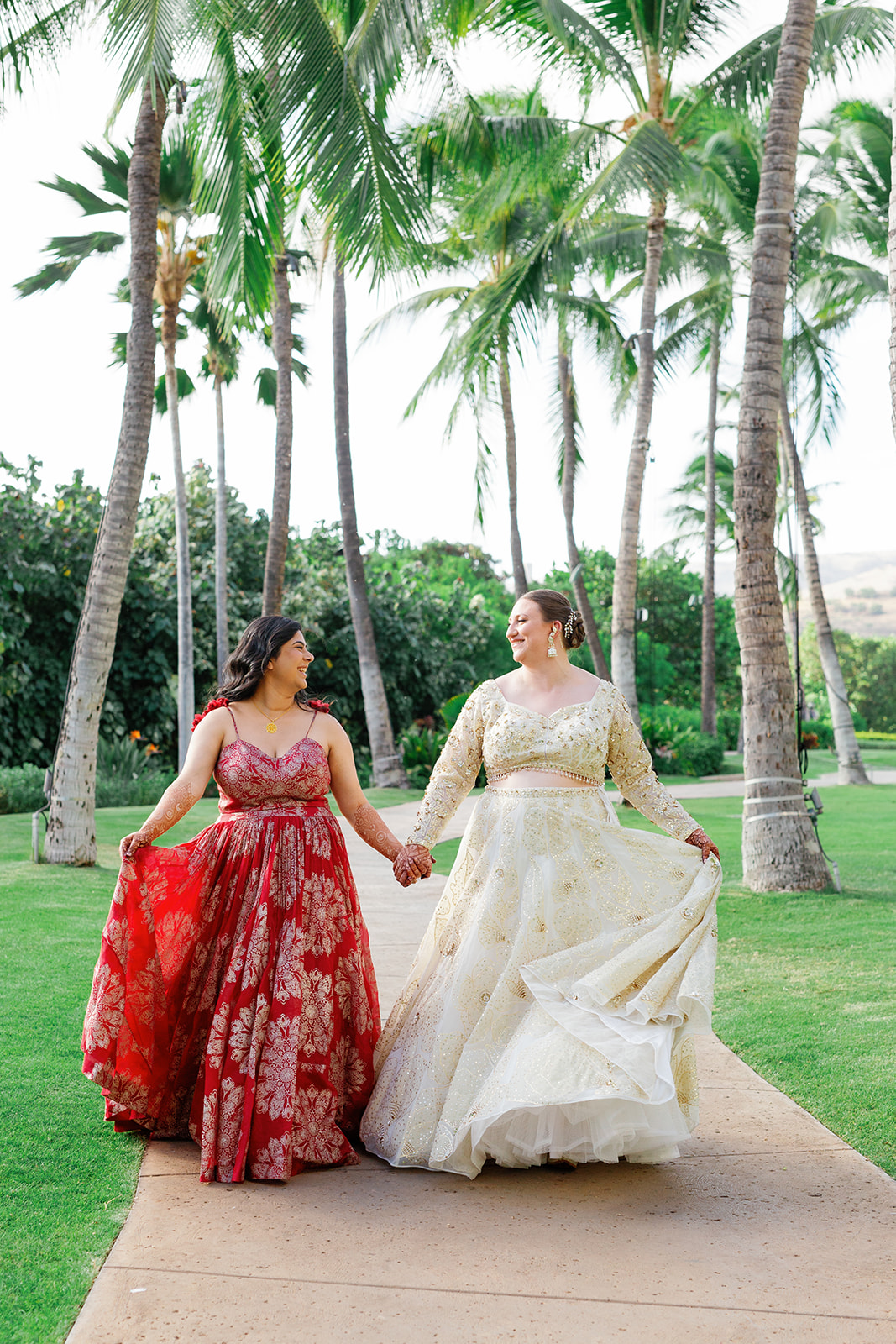
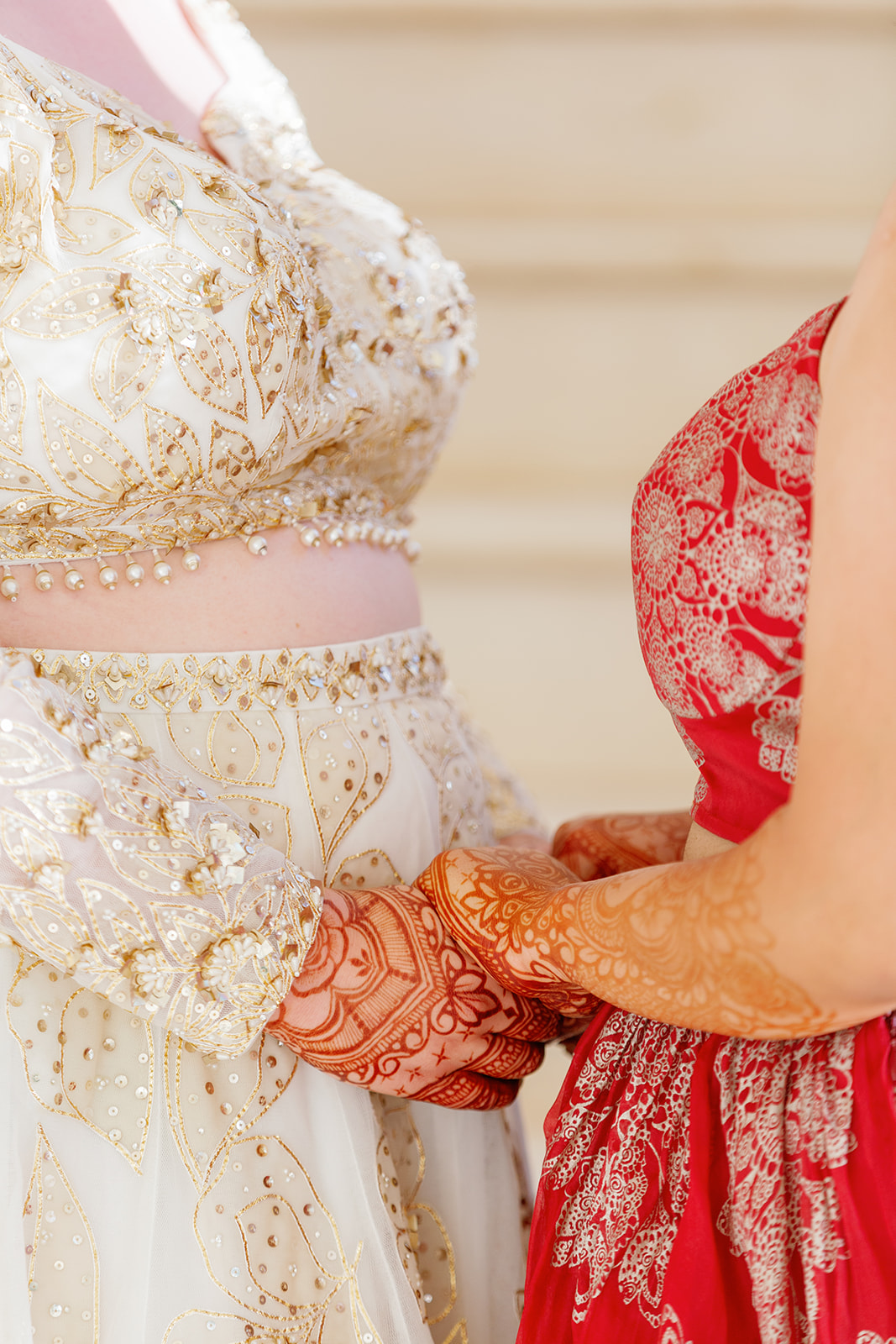
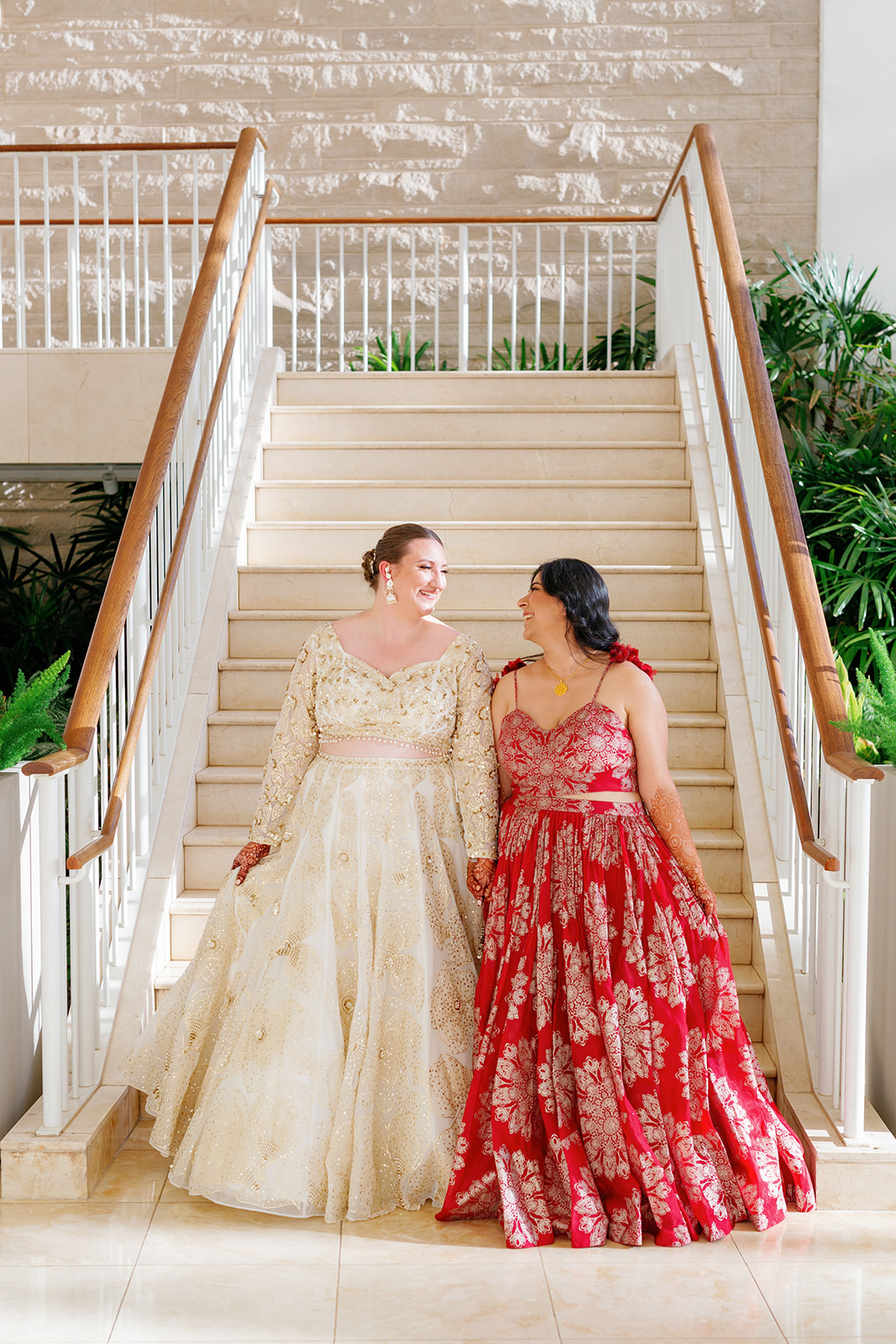
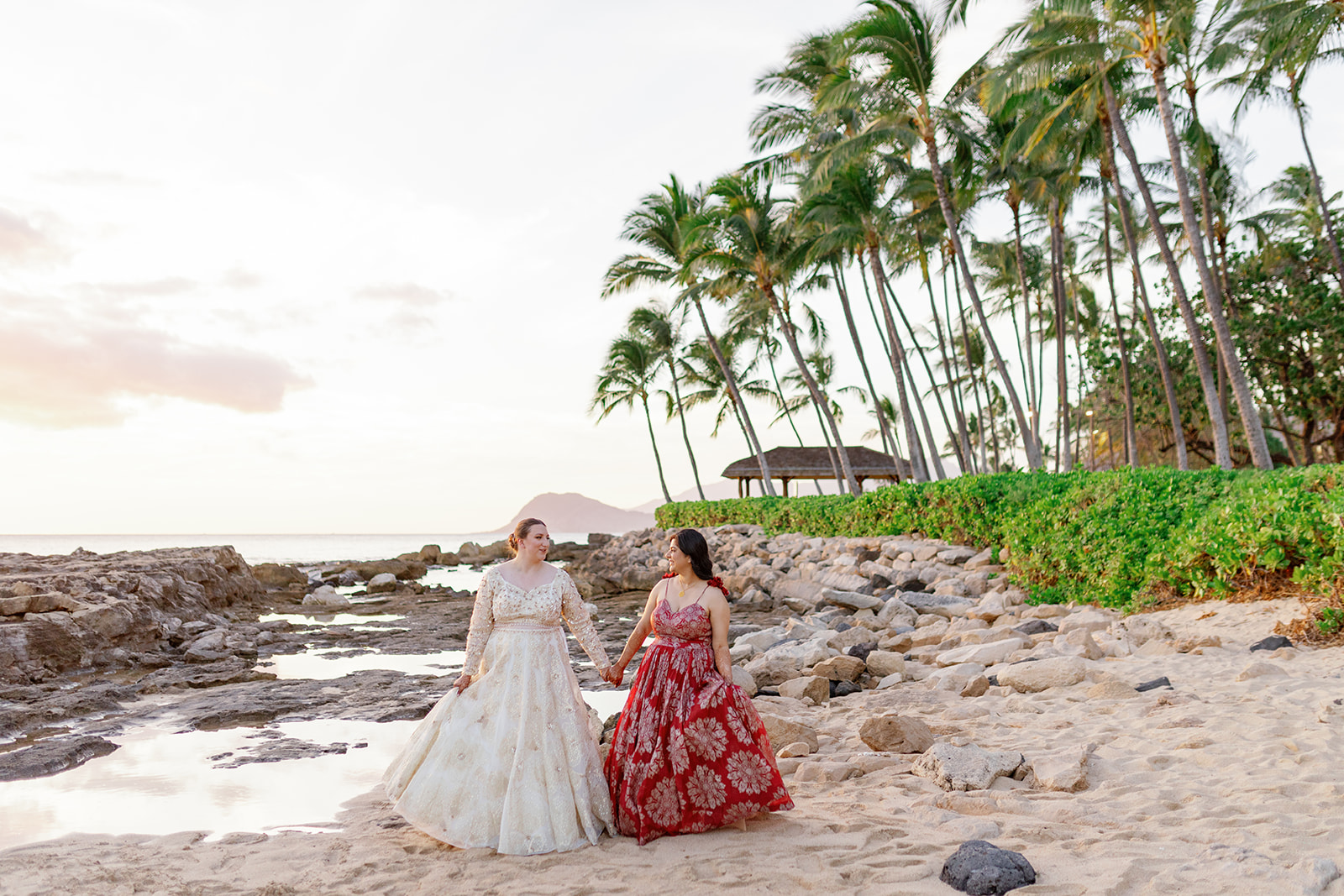
Eden and Gunjan are from two different backgrounds, but they found a way to beautifully merge their cultures and families for their wedding at the Lanikuhonua Cultural Institute. This wedding was so special – Eden and Gunjan were two gorgeous brides who wanted to plan a wedding experience that reflected Gunjan’s Indian culture, Eden’s Jewish culture, while also creating their own traditions as they saw fit.
While I don’t have a full understanding of all the different traditions they included, they were great about sharing with me what was most important to photograph in each moment, regardless of the gender norms of their cultures. Eden and Gunjan found similarities with each of their culture’s wedding traditions and were happy to make them their own.
Before the wedding
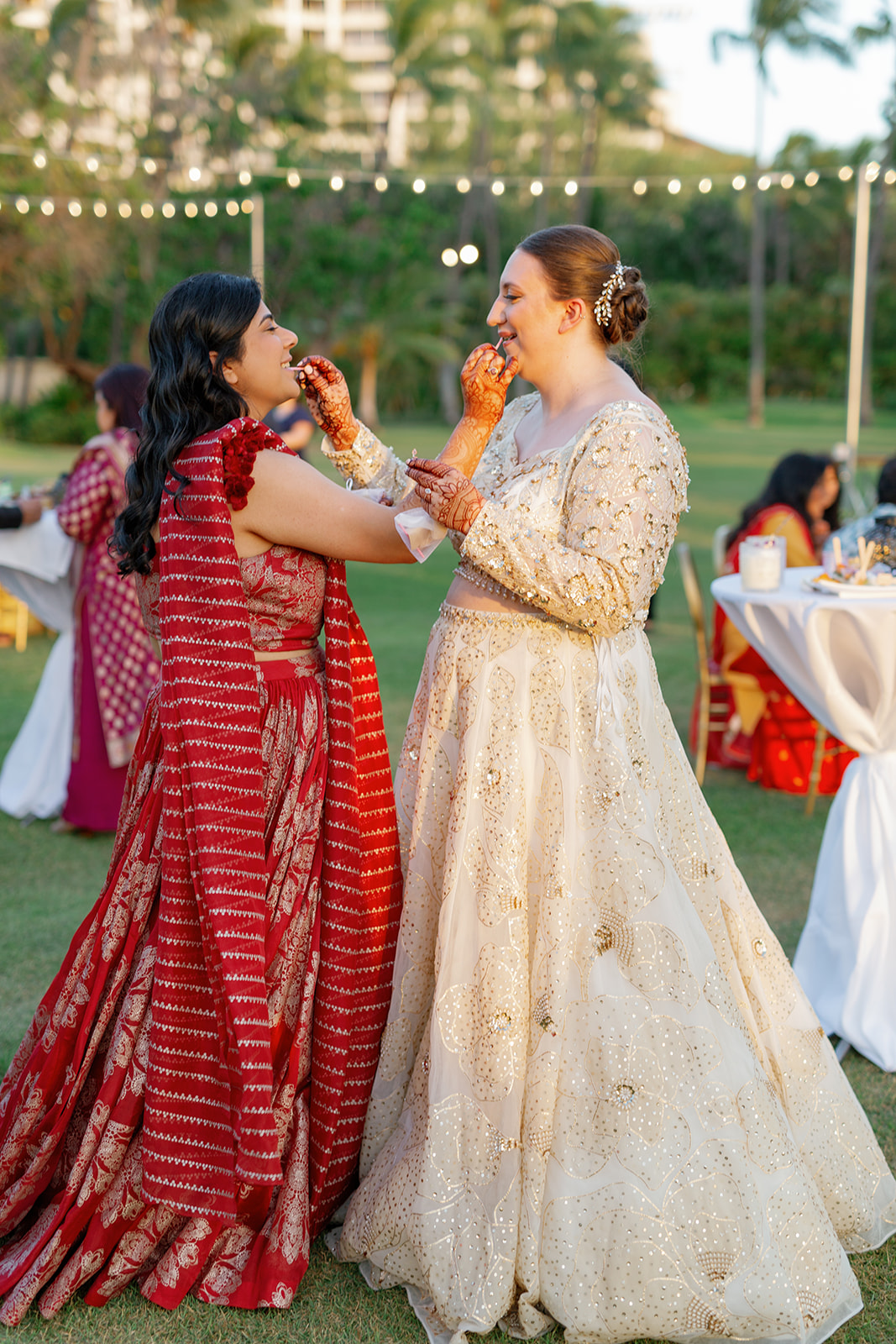
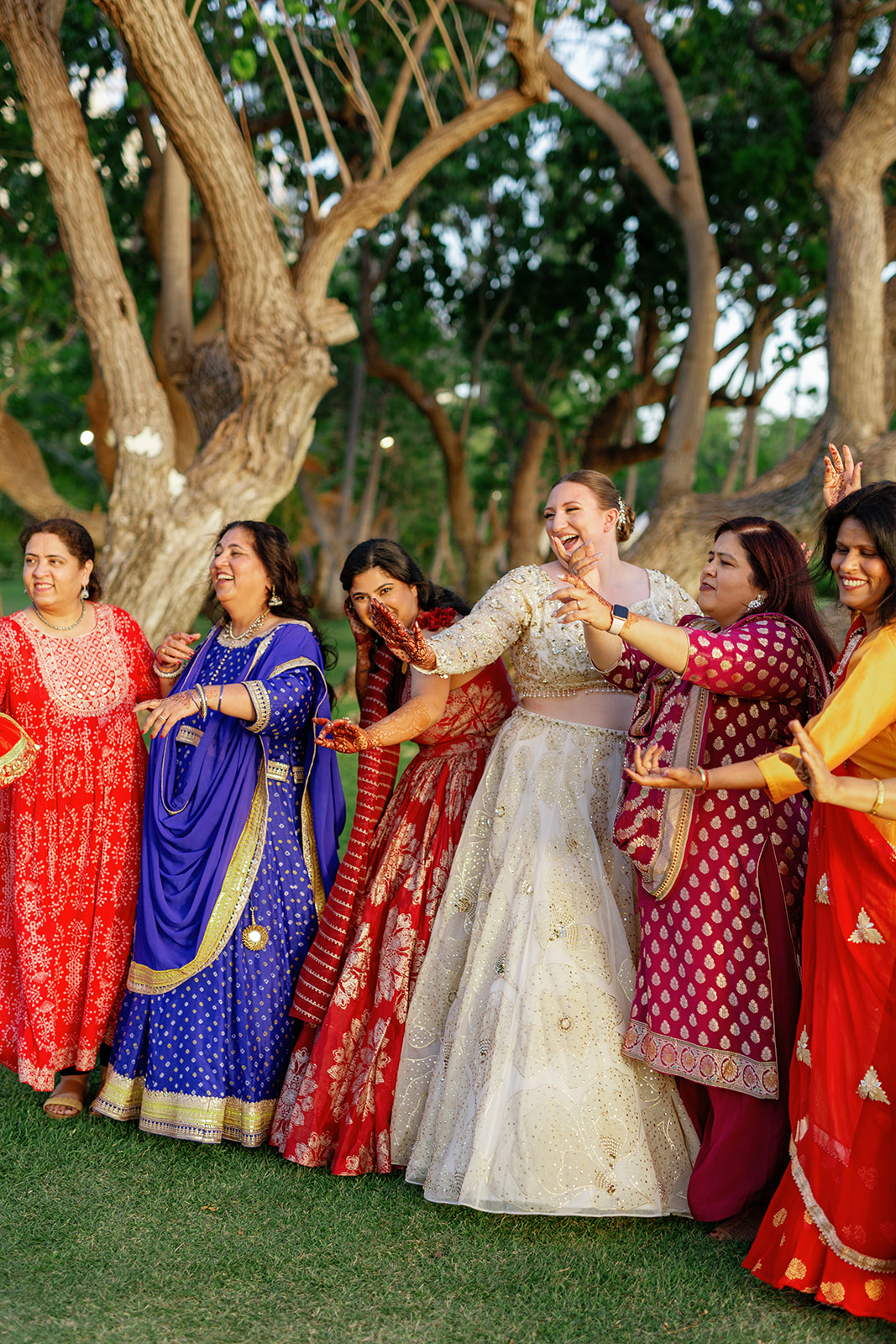
Eden and Gunjan hosted their entire wedding weekend at Lanikuhonua Cultural Institute in Kapolei, HI, which started with their Sangeet night and welcome party. This was a short evening filled with mingling, introductions, a delicious spread of food, and fun family and friend dances to celebrate the couple’s upcoming nuptials.
Getting ready
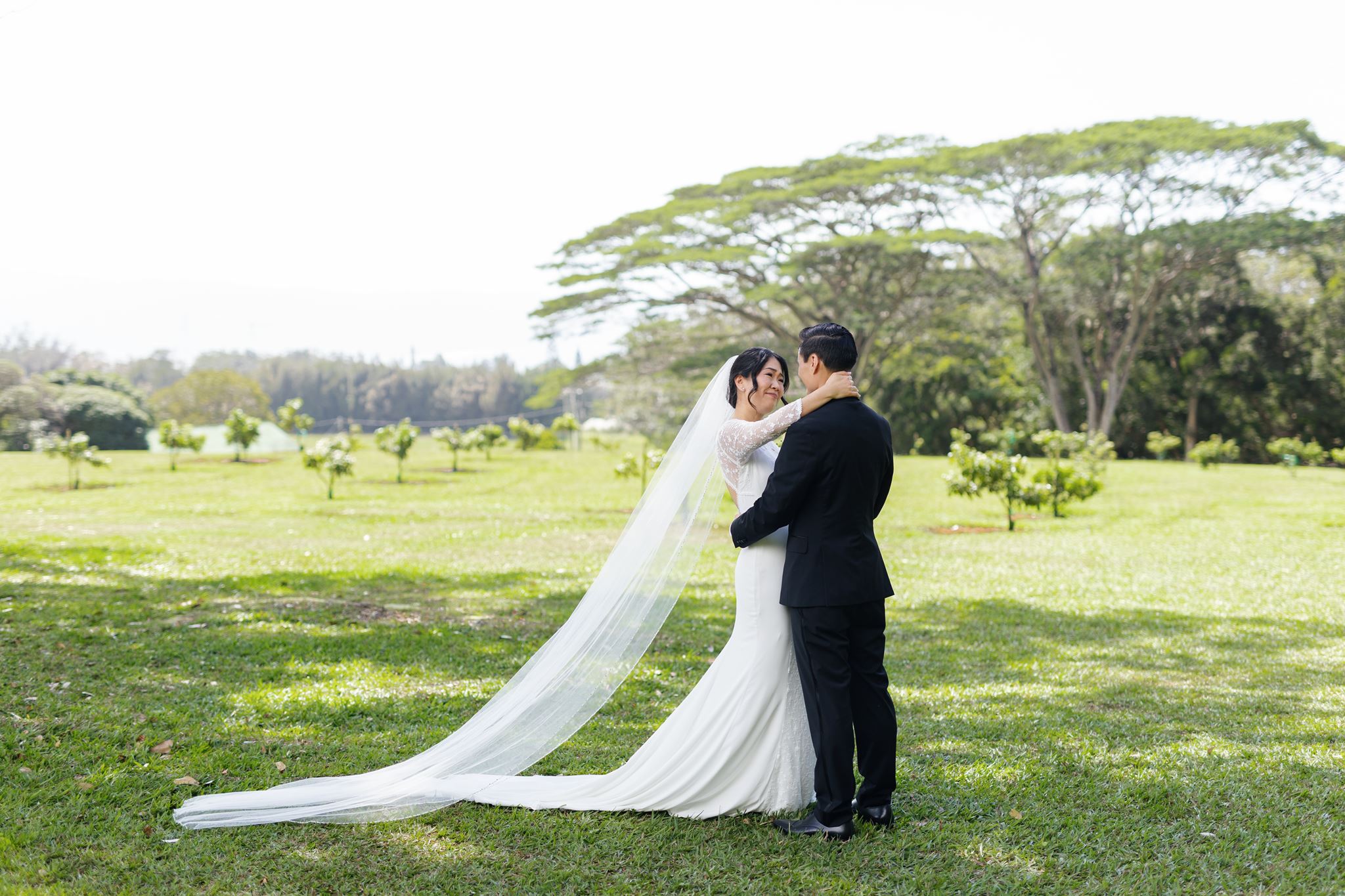
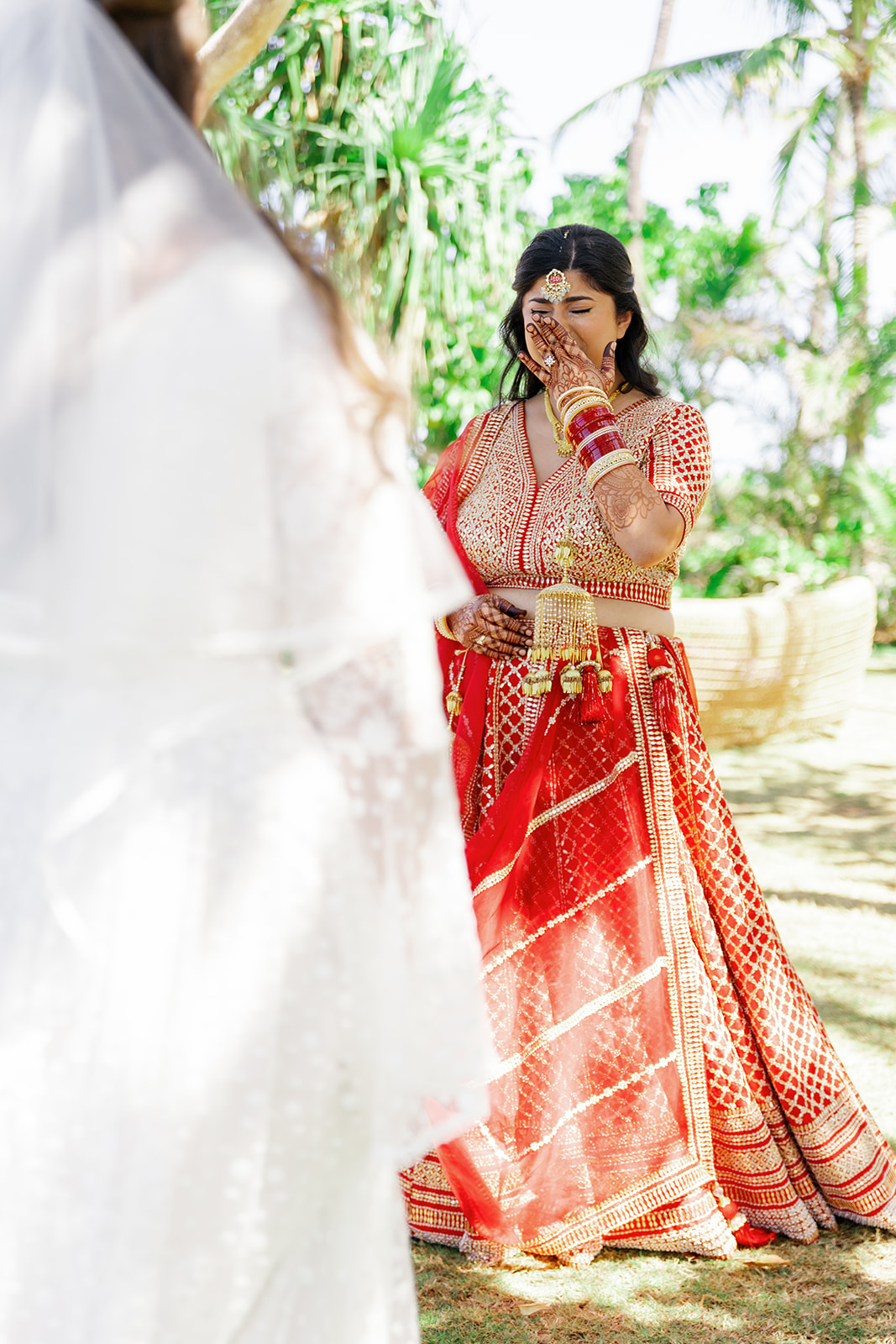
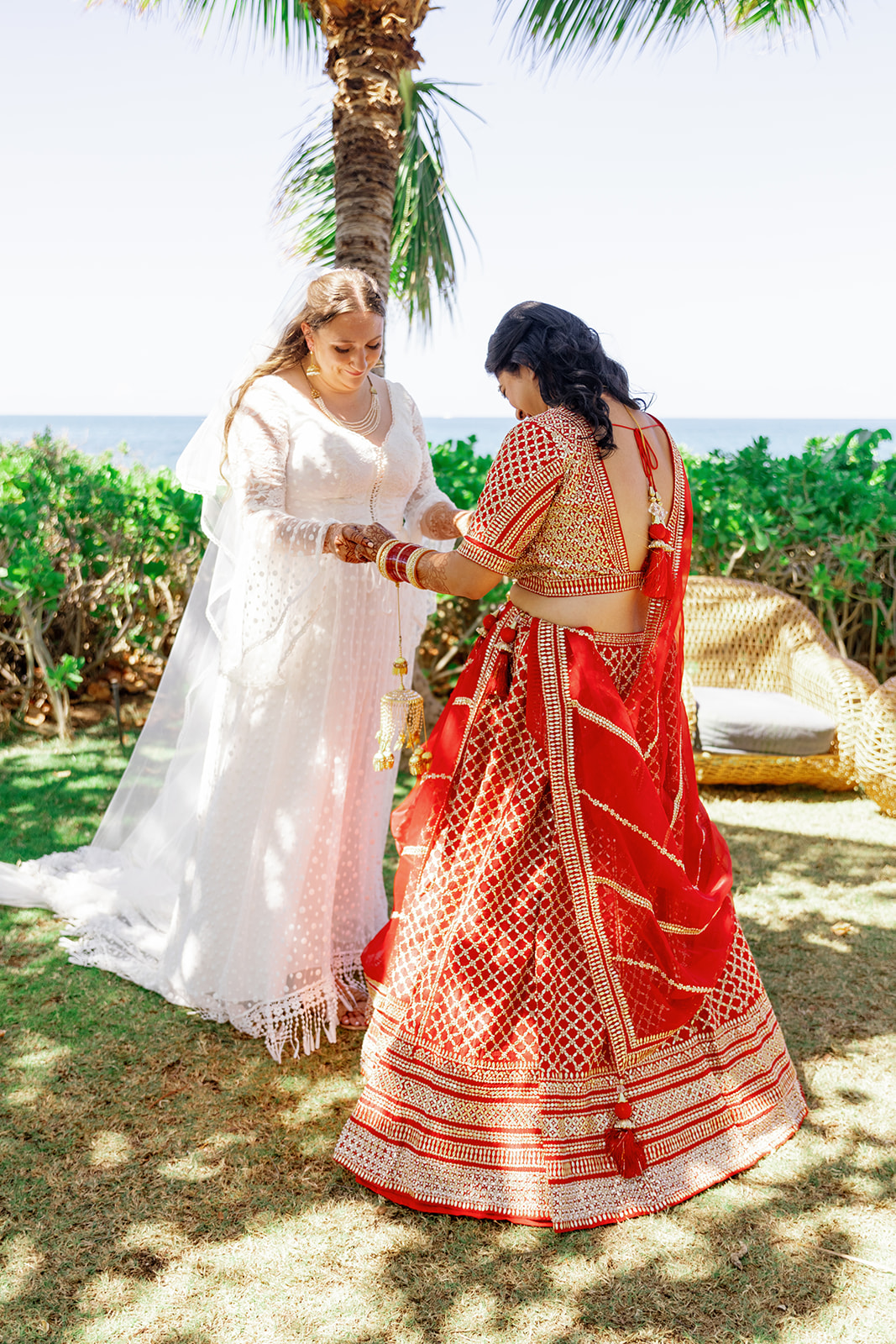
The following day started with each bride getting ready separately at the Four Seasons Resort on Oahu, followed by a sweet, heartfelt first look next to the water and underneath the palm trees – it truly was a cinematic moment!
The ceremony
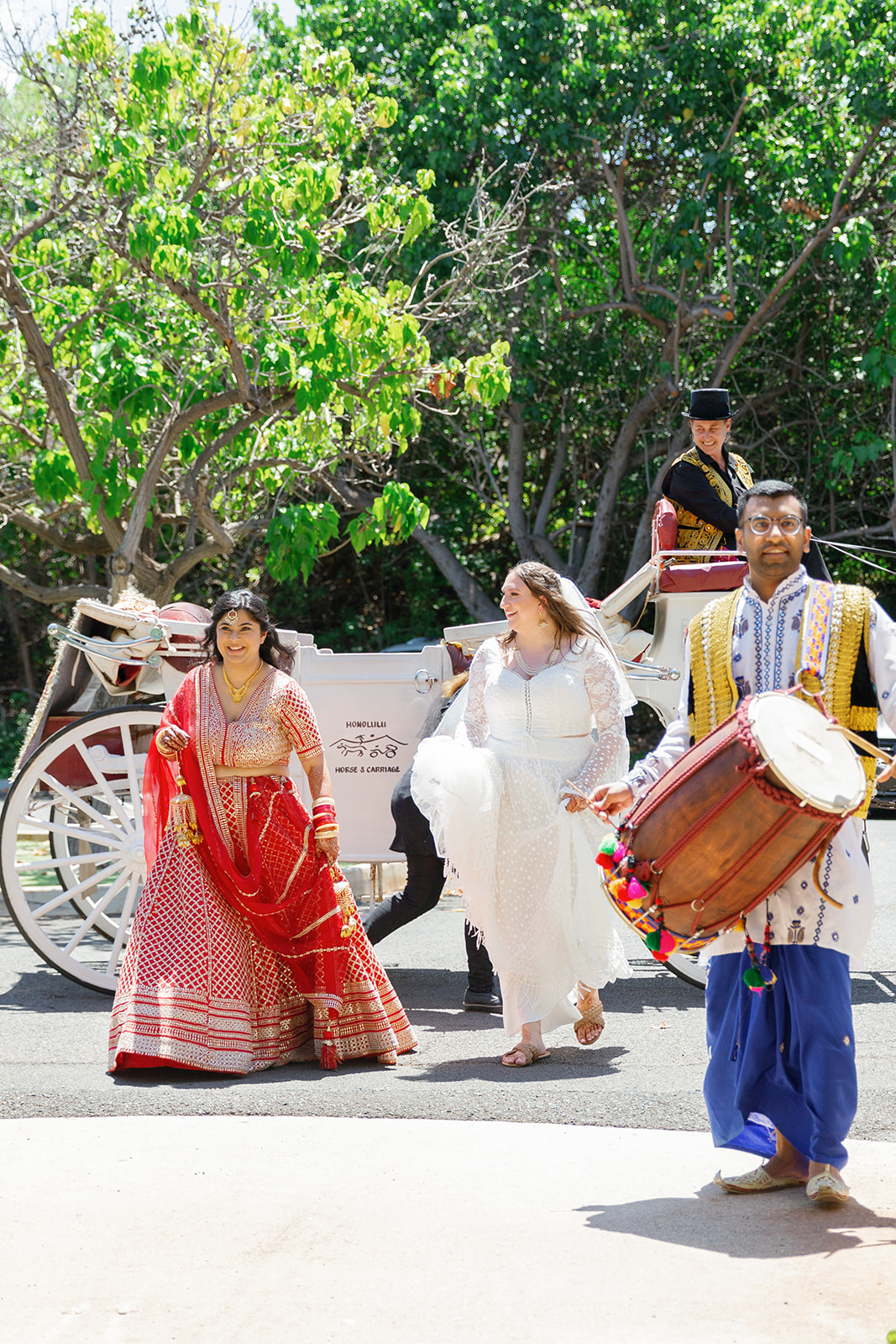
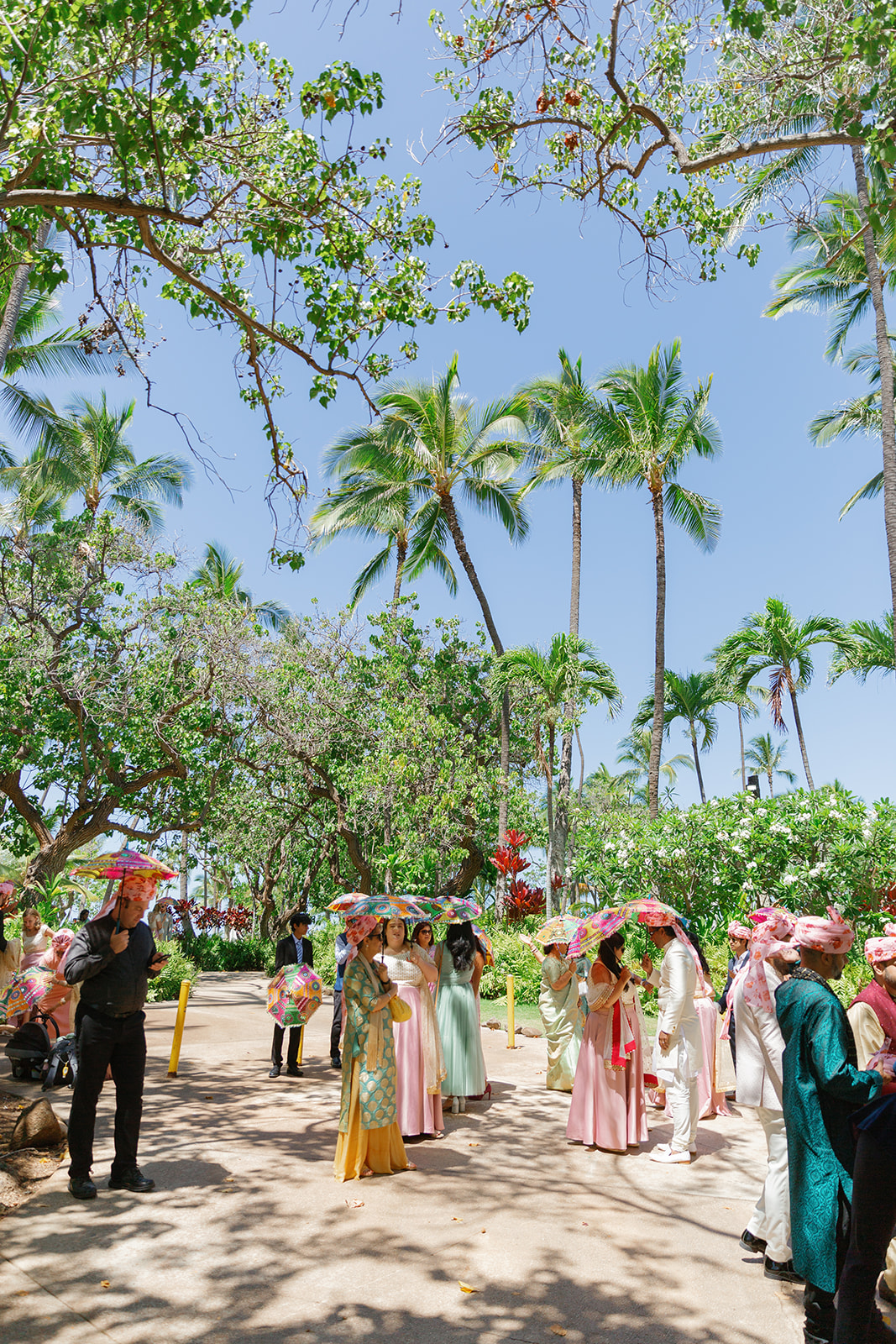
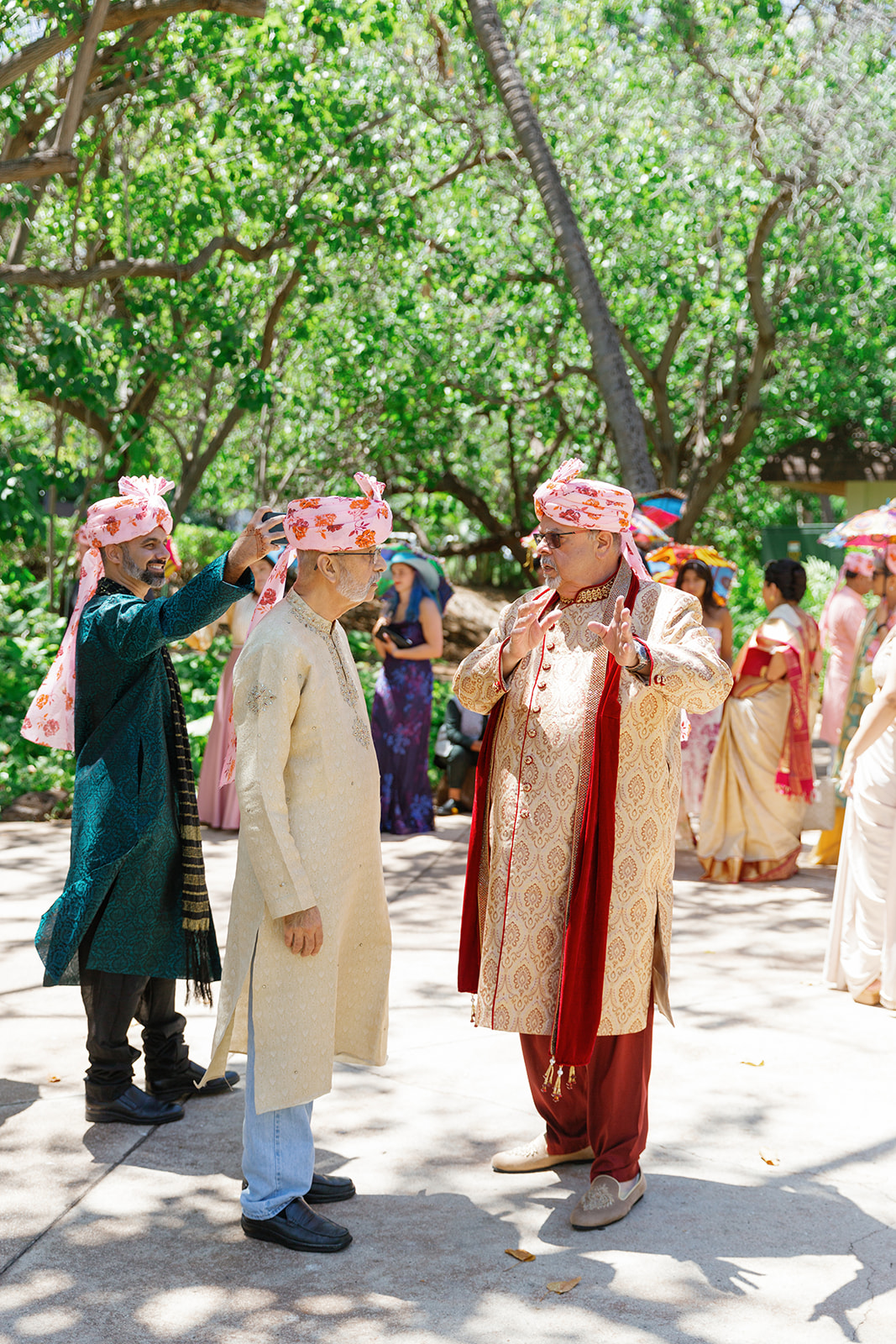
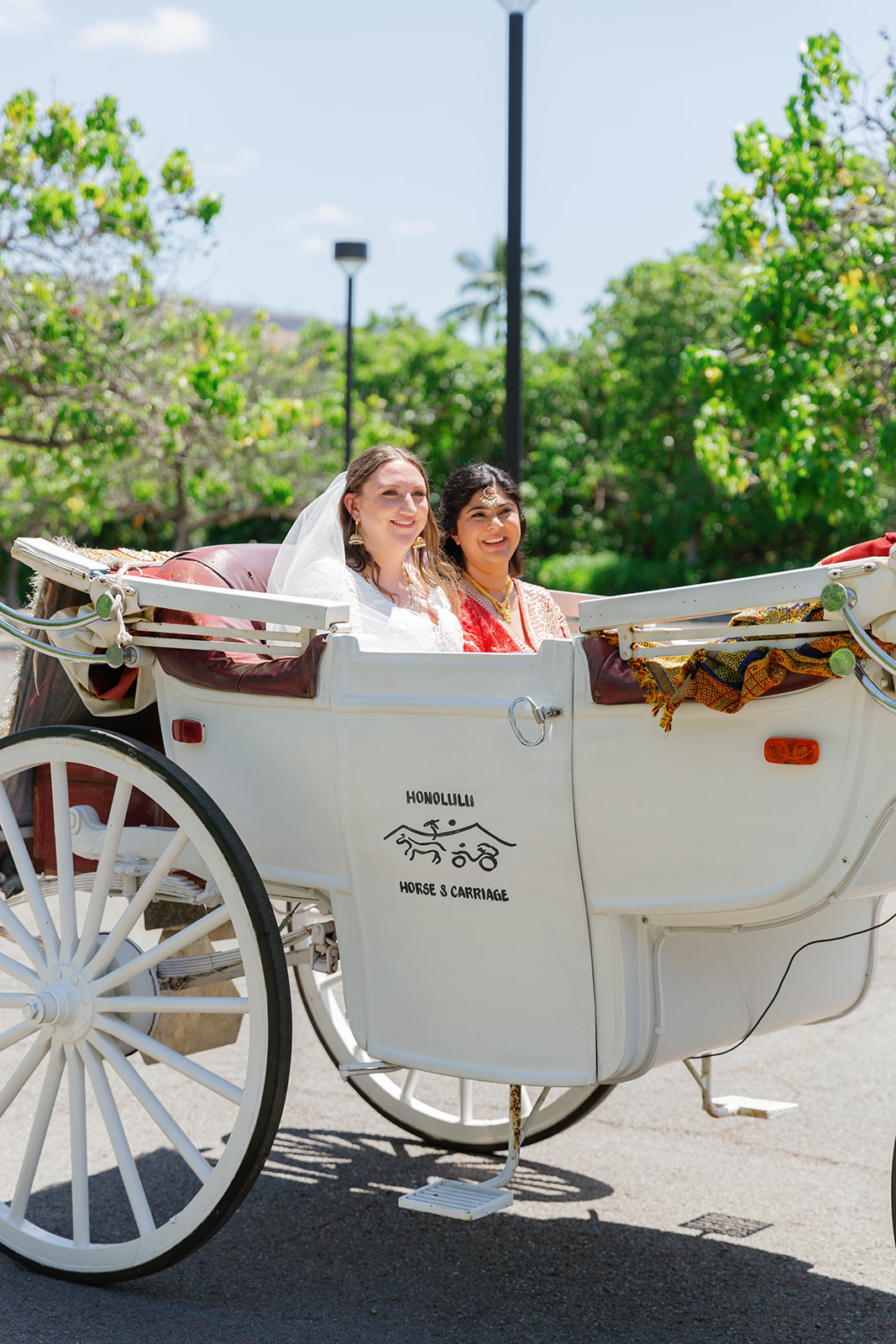
The wedding festivities then began at Lanikuhonua Cultural Institute at Phase II with the Baraat ceremony. Traditionally, in Hindu weddings, a groom would arrive on horseback, and this is one of the first examples where Eden and Gunjan wanted to honor their traditions in their own way.
Instead of riding on horseback, the brides rode in together in a horse-drawn carriage, accompanied by Dhol players. Once at the venue entrance, the next event was the Milni ceremony, where the families both greeted each other, followed by a procession of the entire wedding led by the Dhol players.
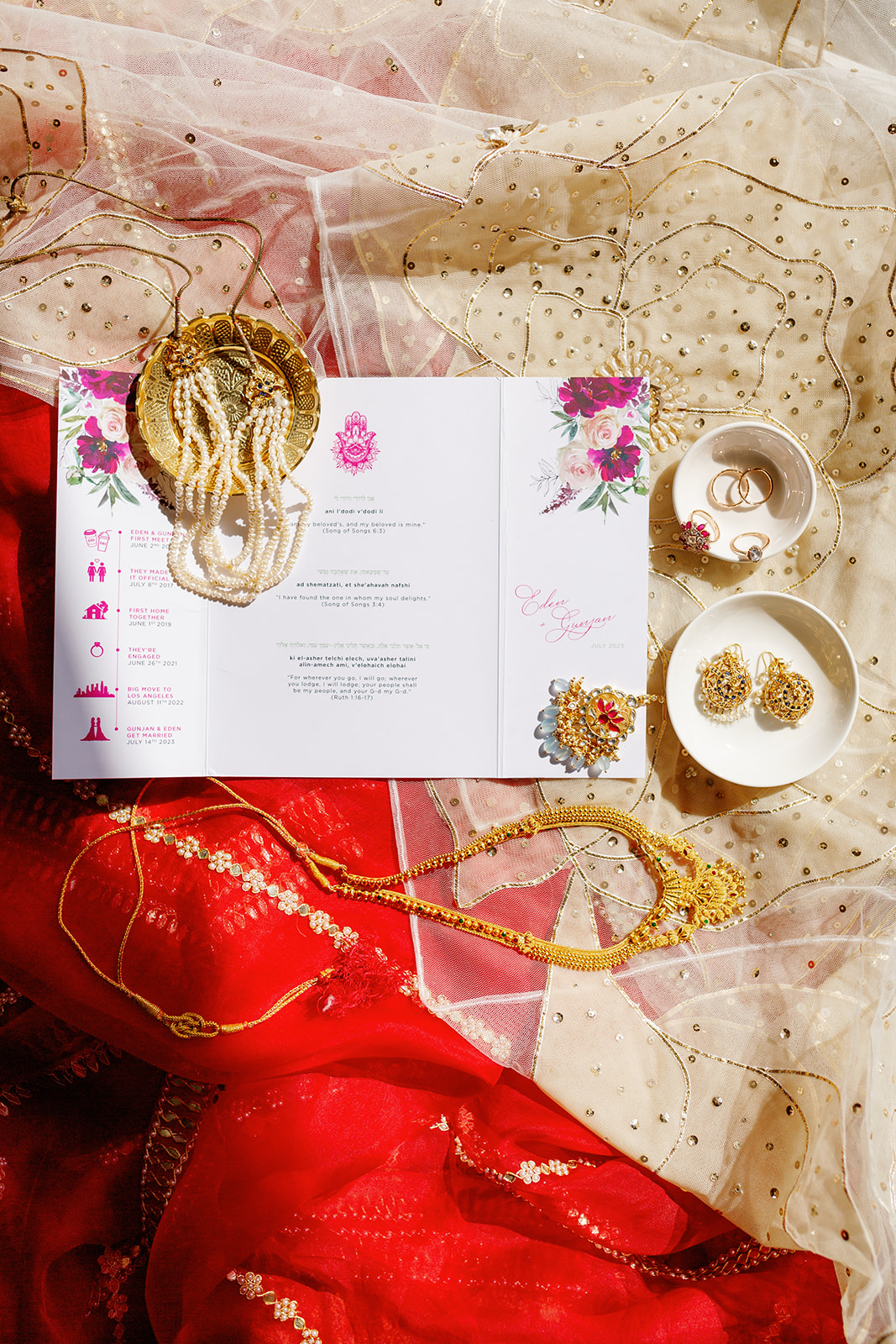
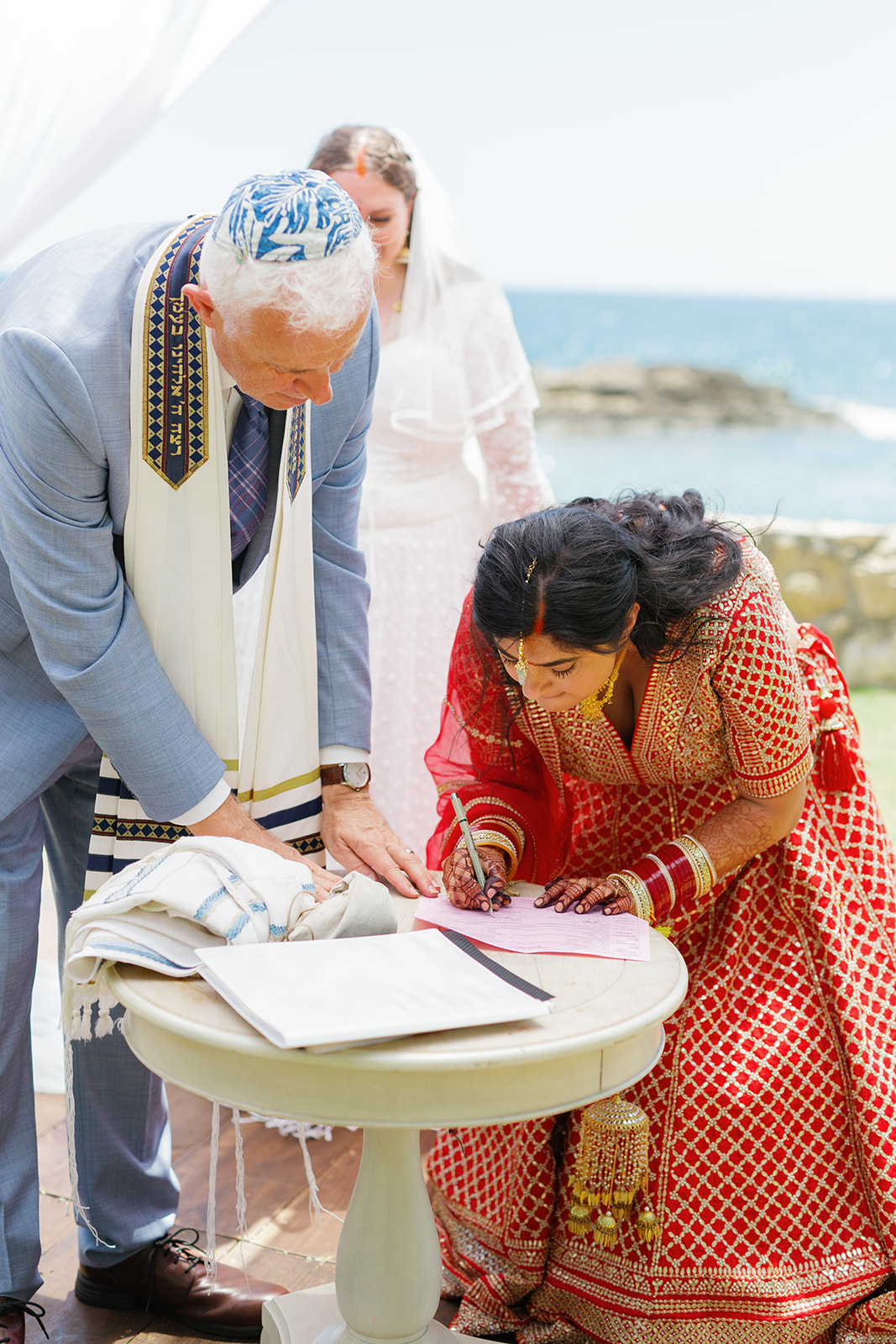
The signing of the Ketubah was the next event, a special Jewish tradition in Eden’s culture. The brides explained the significance of the Ketubah for themselves, each other, and the promises they are making to each other that day. Along with readings from family members and their Rabbi, each bride took a turn signing the Ketubah.
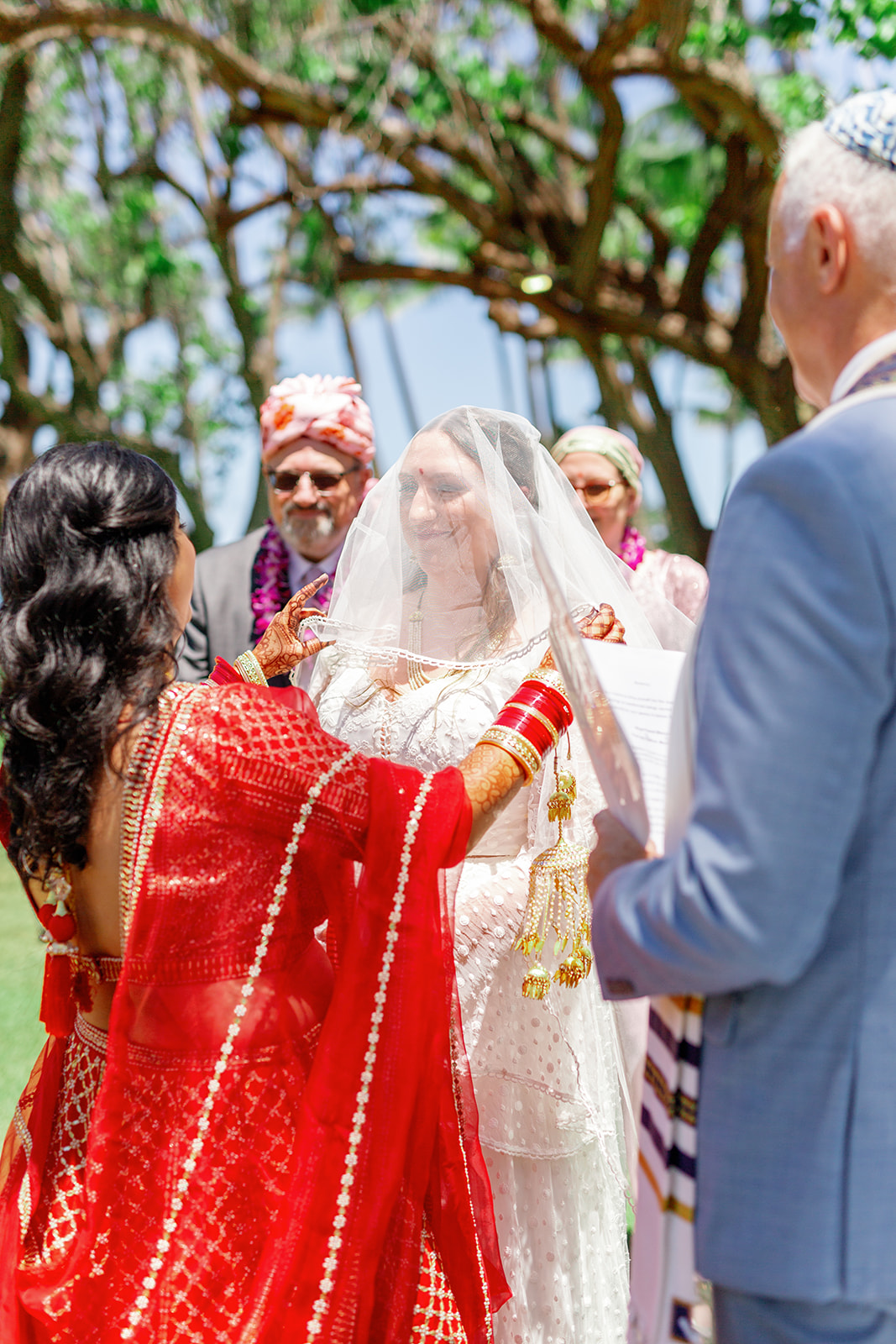
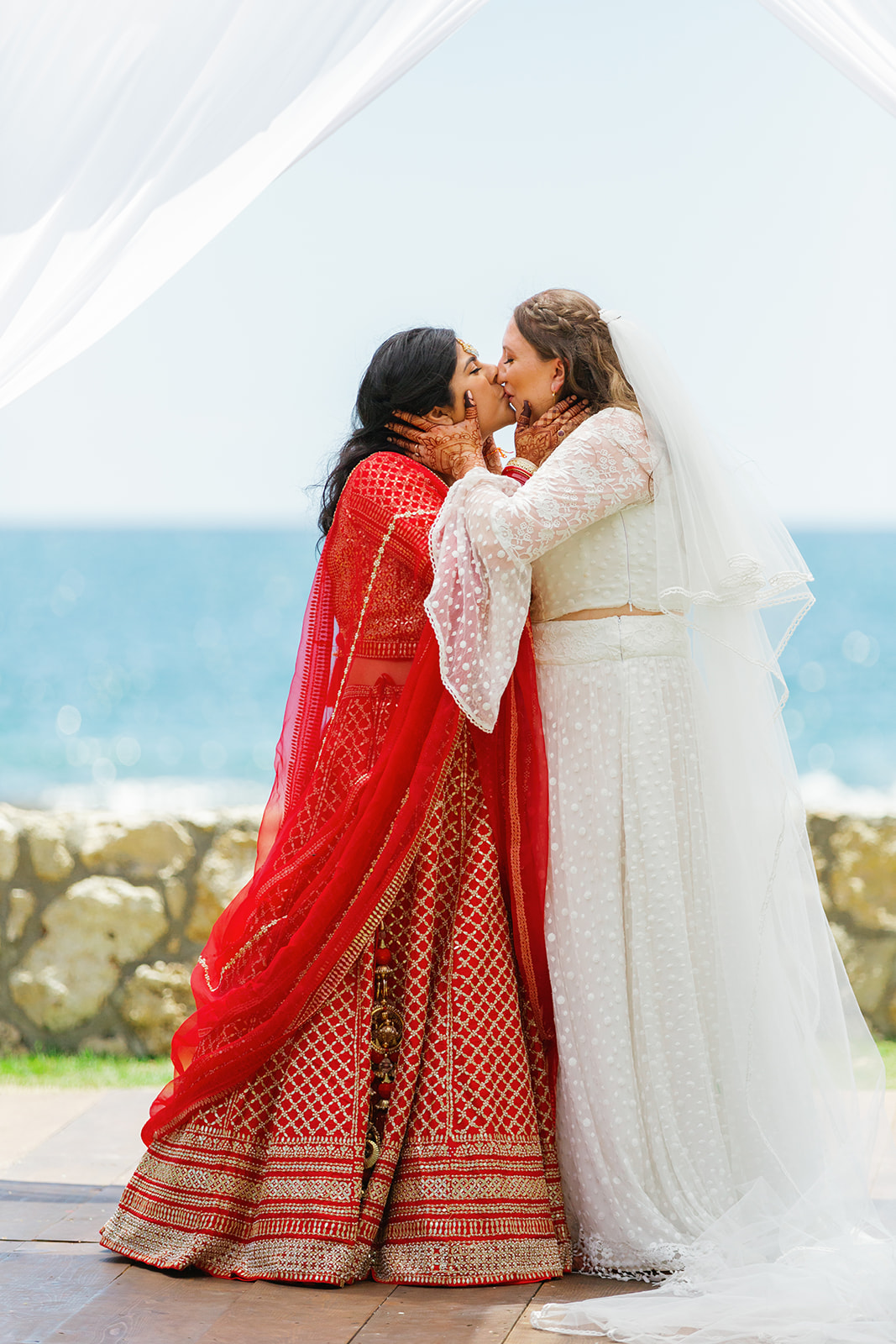
Once the Ketubah was signed, the next part of their ceremony was incorporating the Bedeken tradition. Similar to the Baraat, this was traditionally for a groom to move the veil behind a bride’s face. This was still a special tradition for Eden to have Gunjan remove her veil and symbolize her love for Eden for who she is on the inside.
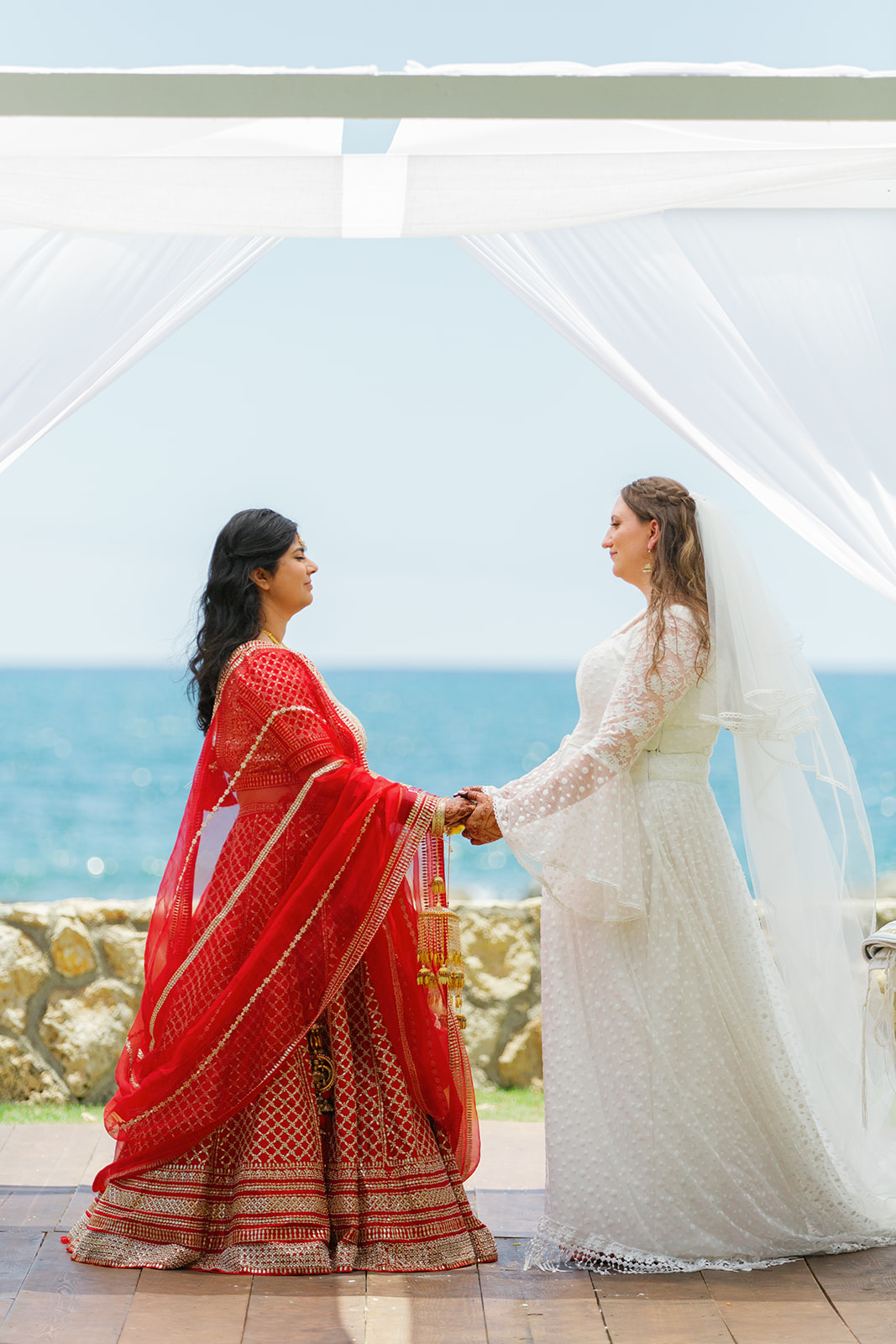
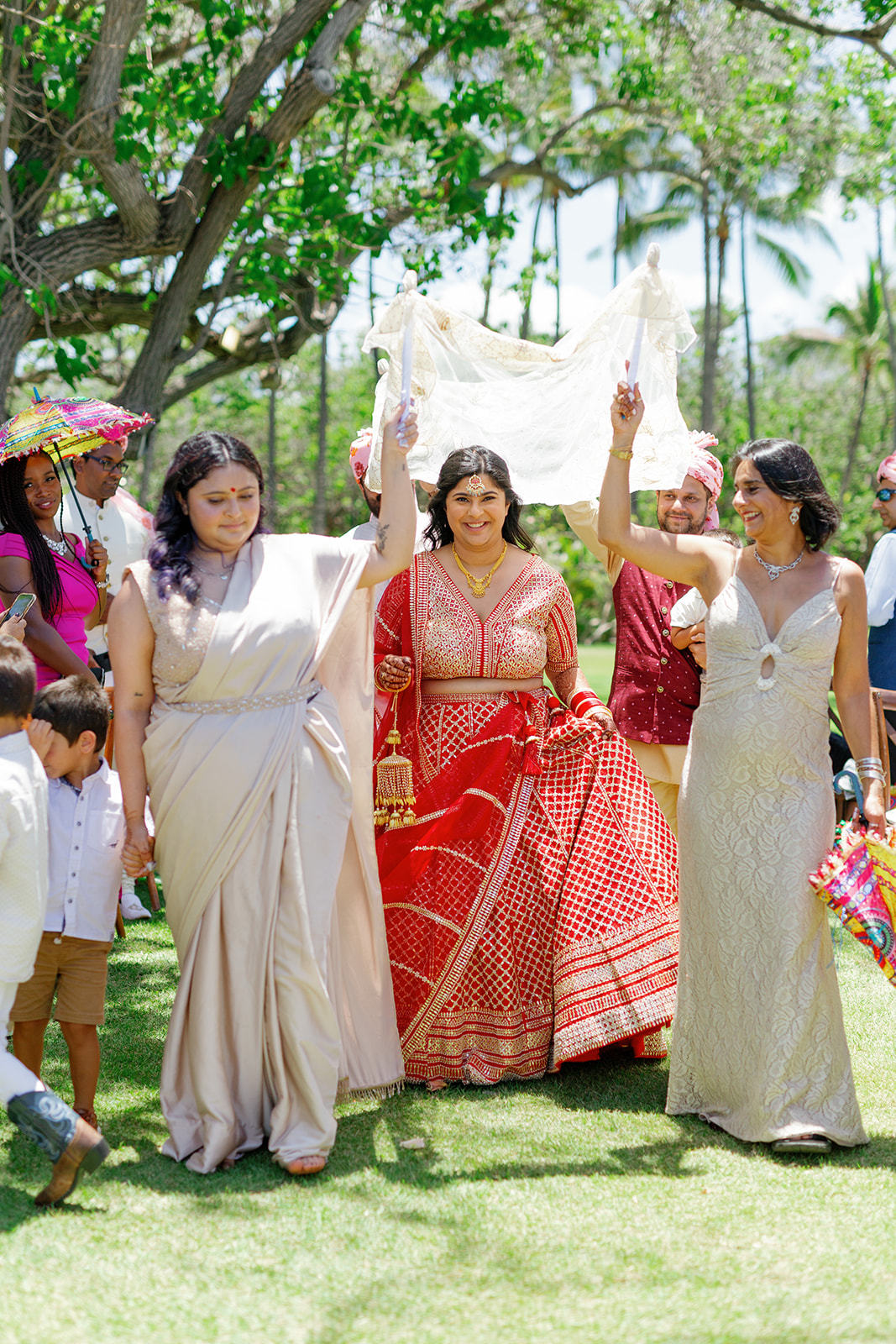
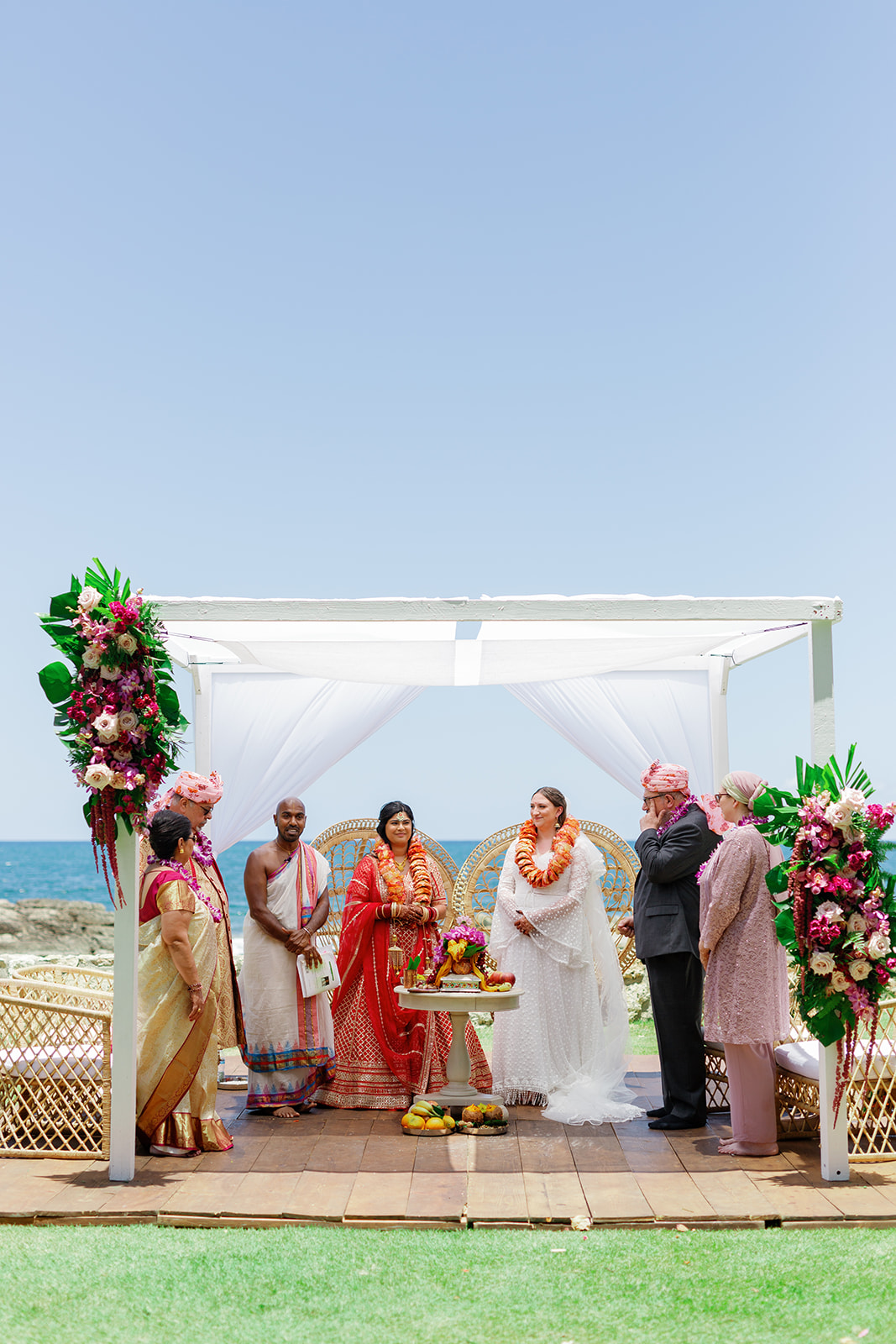
We then moved on to the Hindu ceremony, with Gunjan’s entrance into the Mandap, the platform where the ceremony takes place. This is considered holy ground, and therefore, no one wears shoes.
Following Eden’s entrance, the brides were joined by their officiant and parents. Their Hindu ceremony also included unity ceremonies with the exchanging of garlands, a symbolic tying together, and the seven circles around the ritual fire, with each circle representing different promises.
Jewish ceremony
After the Hindu ceremony, the Jewish ceremony began, where the Mandap was transformed into the Chuppah. There are two ceremonies at a Jewish wedding. It starts with Erusin and follows with Nisuin.
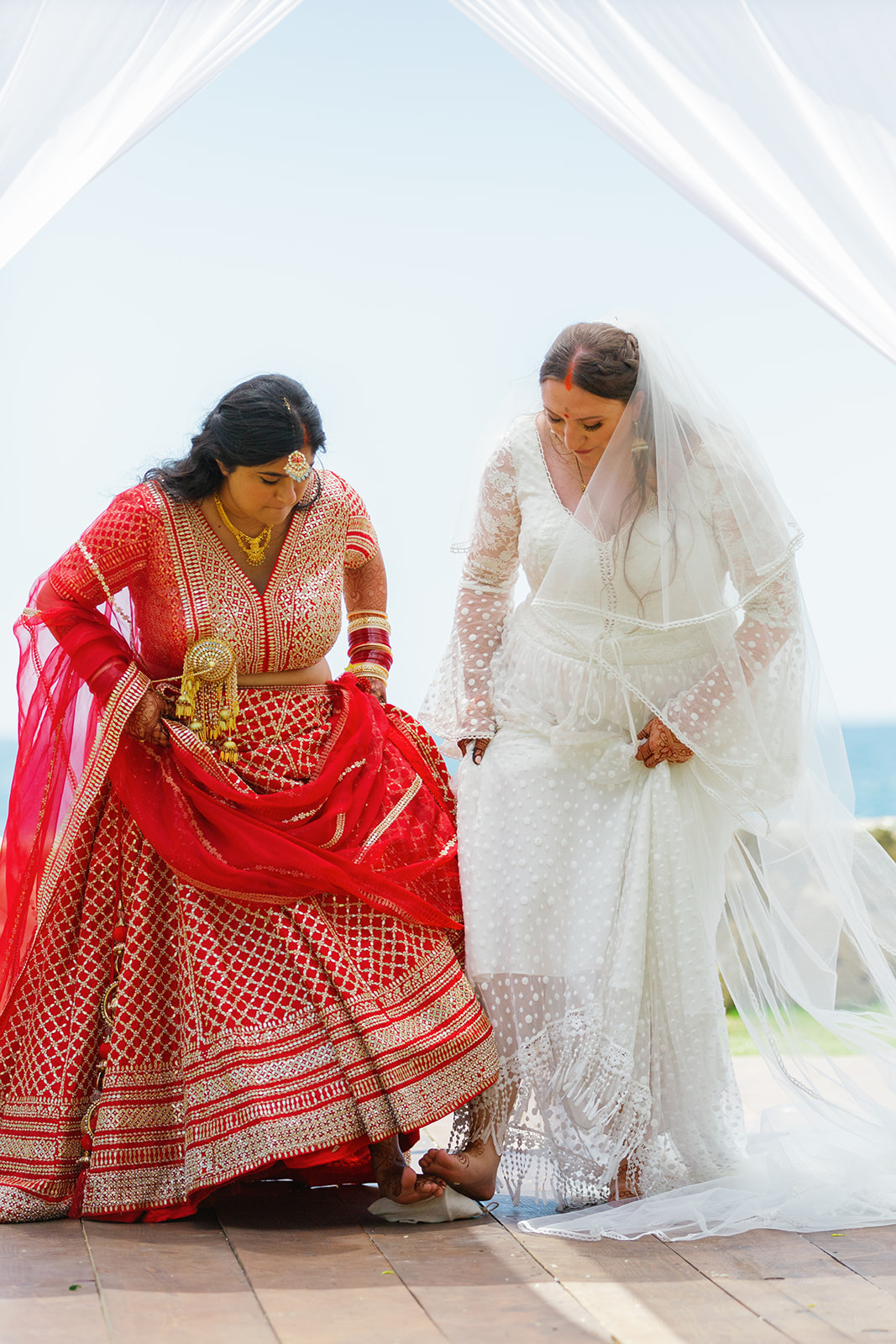
Before entering the Chuppah for Erusin, Eden and Gunjan did a Hakafot (which is circling each other three times and then making one circle together). The vows and rings were exchanged in the first ceremony of Erusin and the first cup of wine.
In the second ceremony (Nisuin), another cup of wine was shared along with a series of blessings, and then the breaking of the glass at the end. A prayer shawl (tallit) was placed over the couple’s shoulders during part of Nisuin. Then the Inman made the Declaration of Marriage.
The way Eden and Gunjan reframed traditions to align with their wedding vision was so beautiful!
Cocktail hour and reception
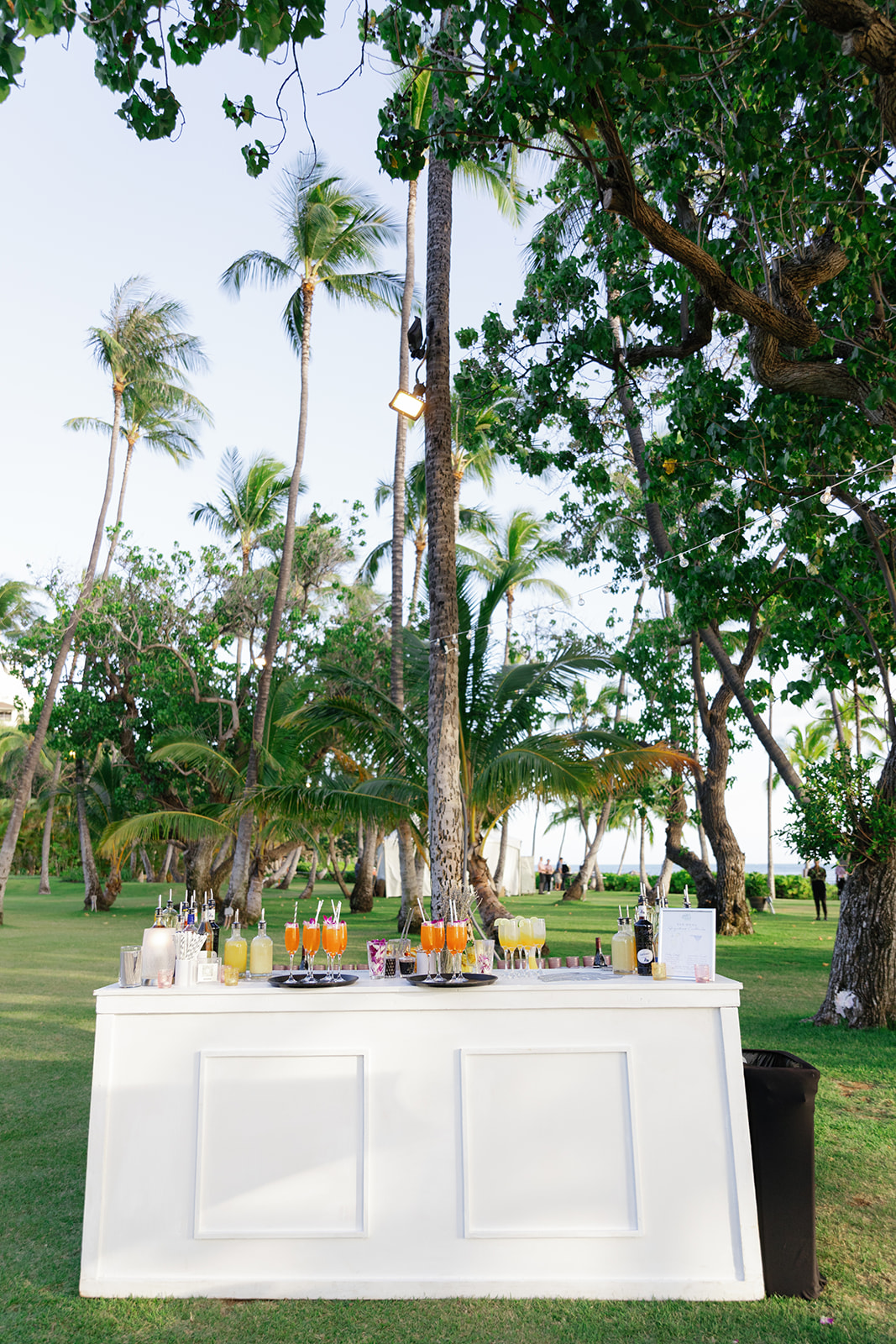
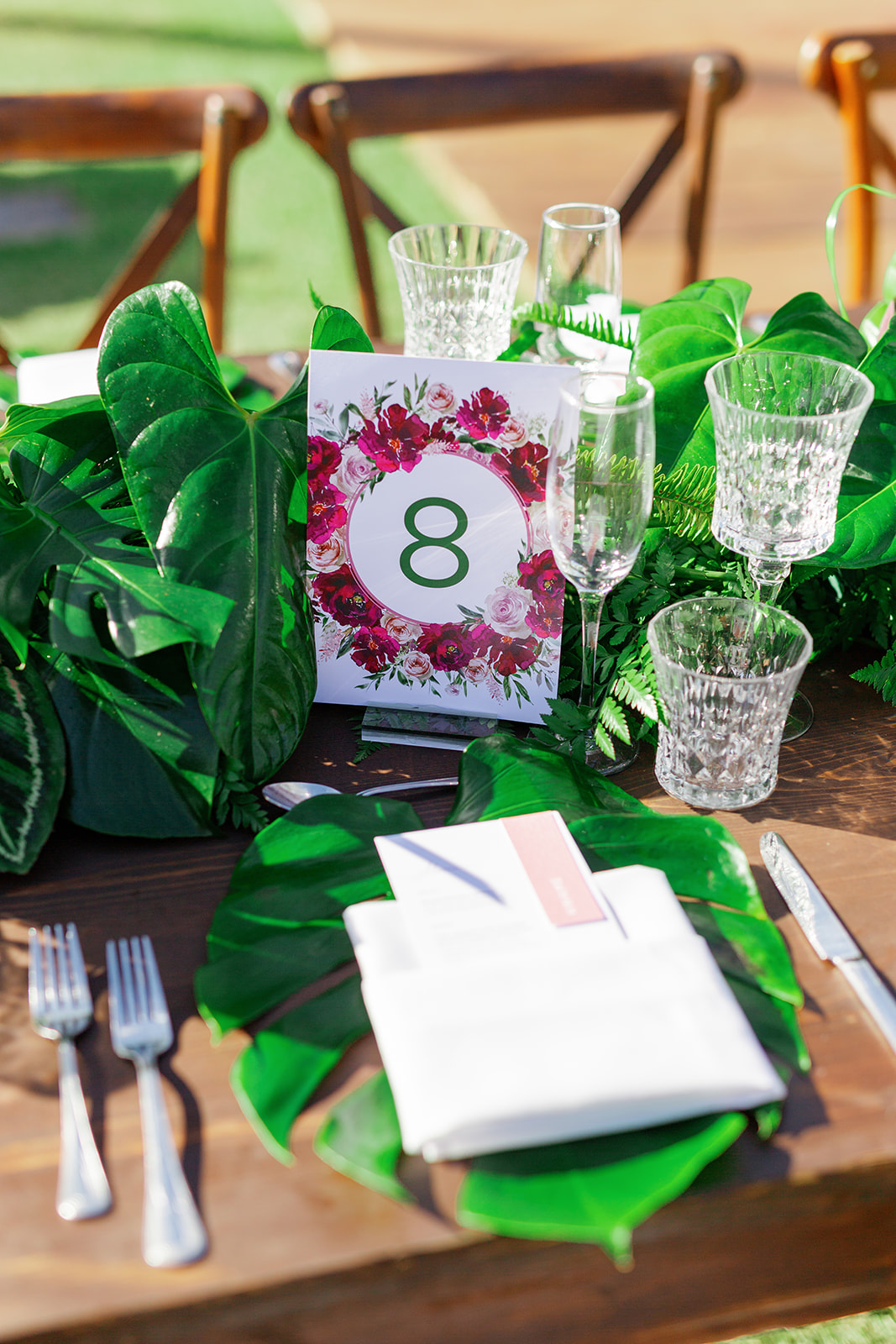
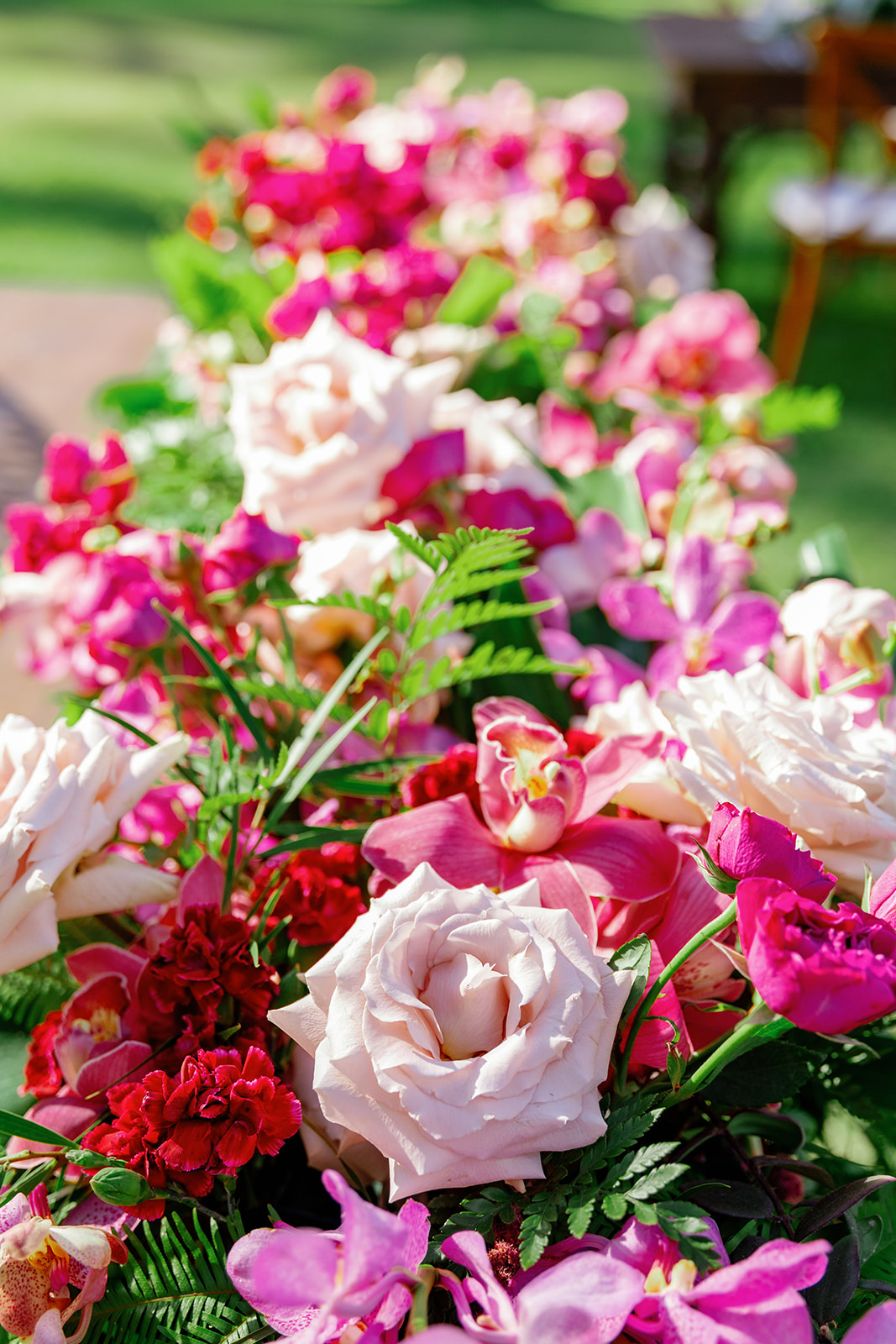
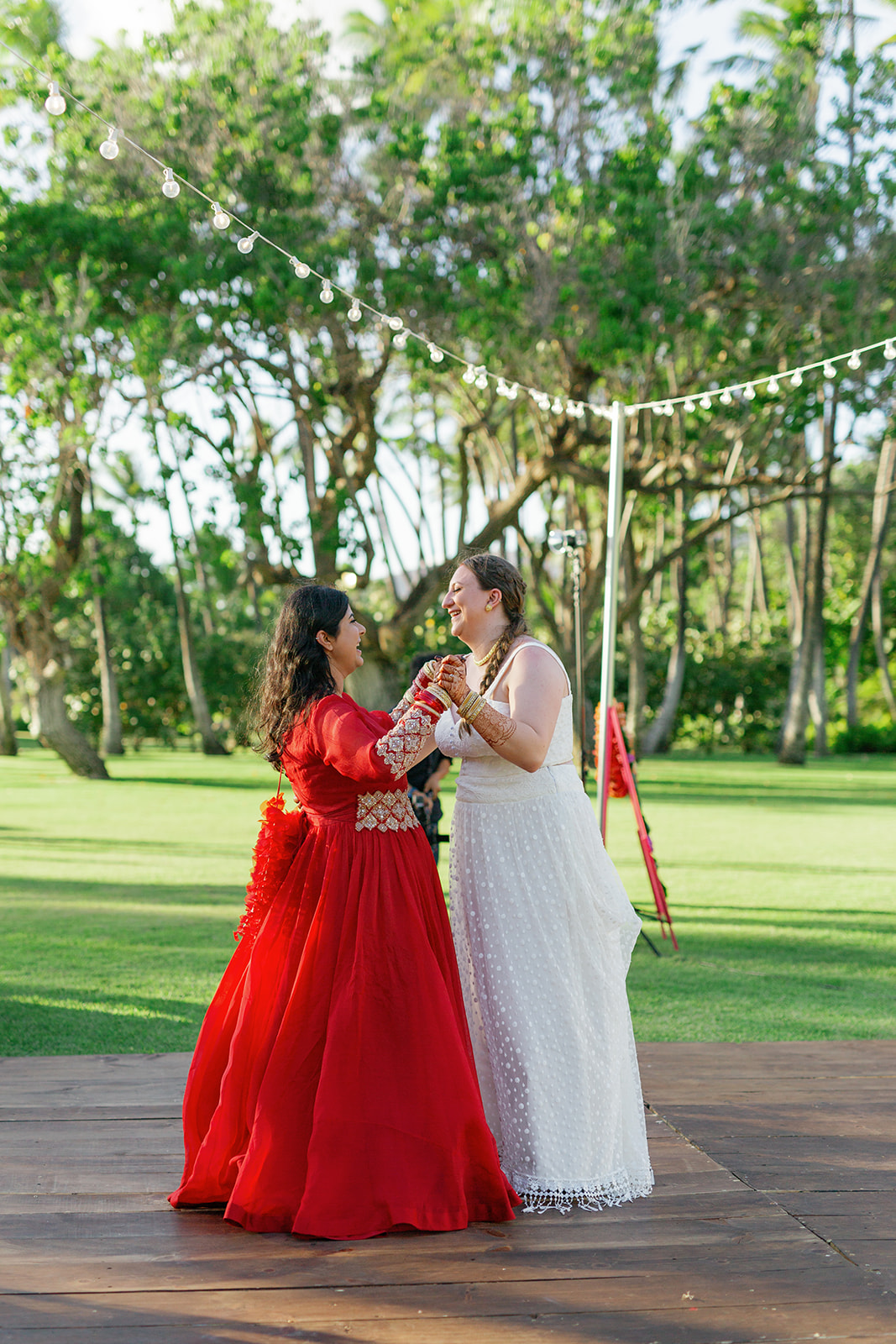
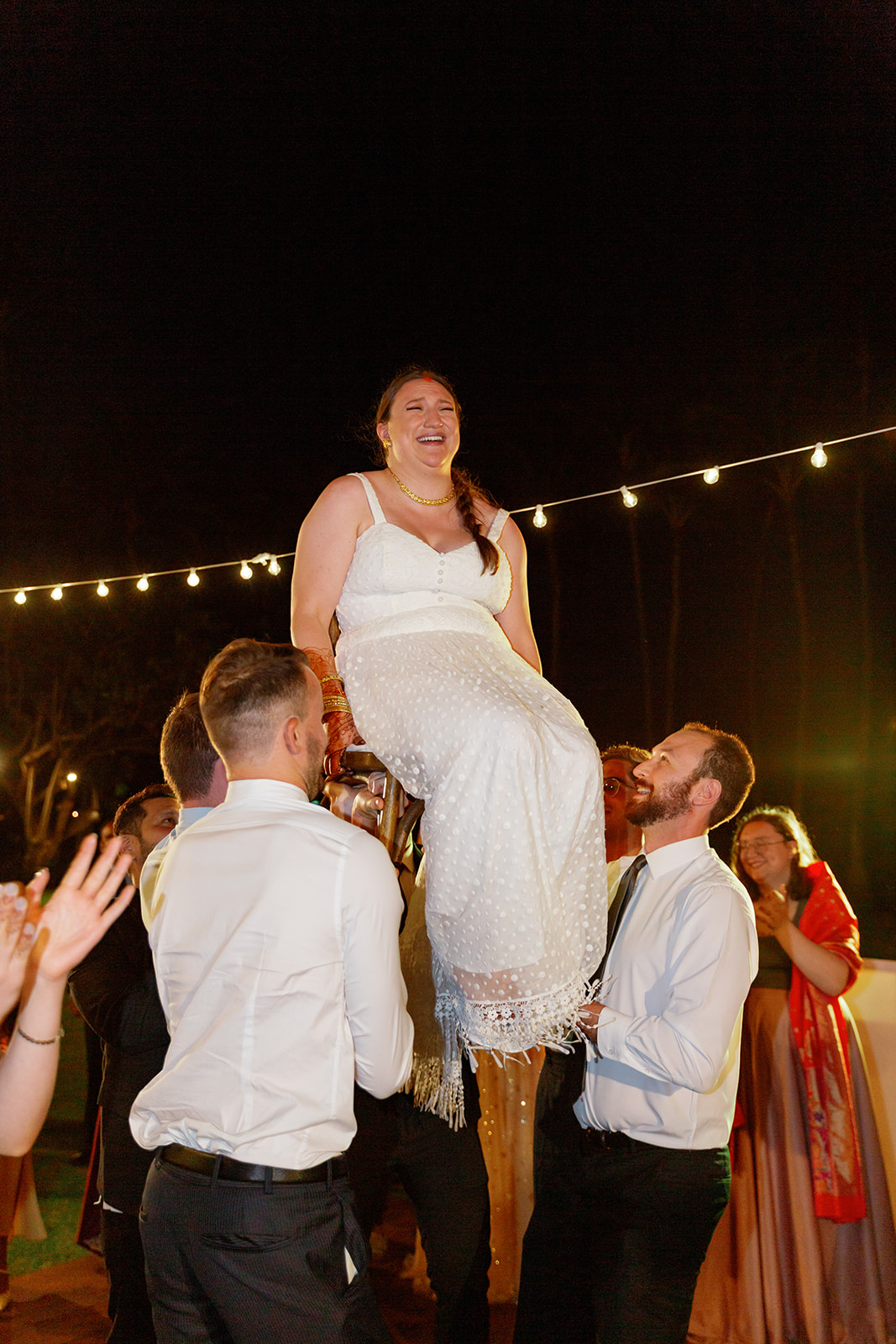
After both ceremonies were over, we headed to a cocktail hour right next to the ocean, where Eden and Gunjan also had their reception. Their day ended with a gorgeous, colorful sunset that perfectly matched their vibrant wedding and also included dancing with their guests. This day was so special, and I’m so grateful I got to be a part of it!
Eden and Gunjan’s Wedding Vendors
I wanted to give a special shout out to E + G’s wedding vendors who made this day possible:
- Venue: Lanikuhonua Cultural Institute @lanikuhonua
- Planning: Maui Love Weddings @mauiloveweddings
- Attire: Kynah + Dreamers & Lovers Wedding Dresses
- HMU: Reveal Hair & Makeup @revealhairandmakeup
- Photography: Sarah Jual Photo
- Videography: Joesph Esser @josephesserphotovideo
- Florals: Passion Roots @passionroots
- Catering: Island Fusion Catering @islandfusioncatering808
- Bar: Stir Beverage @stirbeverage
- DJ: Next Level Entertainment @nextlevel808
- Rentals: Aloha Artisans + Accel @alohaartisans @accelrentals
- Henna: Henna Happens with Karissa @hennahappens
- Officiant: Dr. Raja G. Bhattar @thedrbookworm
Ready To Hire Your Wedding Photographer?
I hope this behind-the-lens look at a multicultural wedding gave you some ideas on how you can incorporate your and your partner’s own special traditions into your day.
Now all you need is the perfect wedding photographer. I’m an O‘ahu-based wedding photographer and serve Honolulu, Kaua‘i, Maui, and beyond. I’m for the couple who doesn’t need a checklist of photos crossed off, but space to feel and experience their day fully. If you love hard, feel deeply, and hope this day will be more than just a blur, I can’t wait to meet you!
You can head over here to learn more about my wedding services or get in touch with me here. Let’s talk about how to bring your dream wedding vision to life!